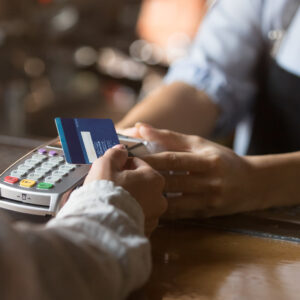
A customer finds your business. They browse your products, compare their options, add something to their cart, and make it all the way through checkout. Then what happens? Their payment gets declined. There was no issue, and there was no fraud. Just a customer who was ready to give you money simply couldn’t.
That’s what makes payment approval rates such an overlooked part of running a business. Merchants spend enormous amounts of time getting customers to the point of purchase. They invest in advertising, SEO, social media, email campaigns, promotions, website design, and customer service. But none of that produces revenue until the transaction actually goes through.
A few percentage points might not sound dramatic when you’re looking at an approval rate on a dashboard. Across thousands or millions of dollars in attempted transactions, those points start looking very different.
Payment approvals are more than a technical metric. They’re the last hurdle between a sale and lost revenue. And your approval rate may be telling you more about your business than you think.
What Is a Payment Approval Rate?
Your payment approval rate is the percentage of attempted transactions that are successfully authorized. If 1,000 customers attempt to make purchases and 950 transactions are approved, the business has a 95% approval rate. Simple enough, right?
What happens inside those few seconds between clicking “Pay” and receiving an approval is considerably more complicated. Payment information moves through several parts of the payment ecosystem. The transaction may involve the merchant, payment gateway, processor, card network, and issuing bank before an authorization decision comes back.
Some declines are exactly what merchants want. If someone is attempting to make a purchase with stolen card information, stopping the transaction is a win. But not every decline is fraud.
That’s where approval rates become important.
Why Approval Rates Matter
Every legitimate payment that gets incorrectly declined represents a customer who wanted to buy something and wasn’t allowed to. Think about how unusual that is compared with most other problems in business.
Normally, merchants are fighting to convince people to spend money. They offer discounts, buy ads, optimize landing pages, send abandoned-cart emails, and spend years building a recognizable brand. A declined legitimate transaction throws away all that work at the finish line. The customer may try another card. They may contact you, or they may even come back tomorrow – or they may simply go somewhere else.
That’s why approval rates deserve attention alongside conversion rates, average order value, customer acquisition cost, and other major performance metrics. Your checkout isn’t truly converting a customer until the payment is approved.
A Small Difference Can Become a Big Revenue Problem
Imagine two businesses each receive $1 million in legitimate attempted transactions. One approves 97% of those payments. The other approves 92%. That’s a five-point difference, but it can represent tens of thousands of dollars in transactions that one merchant captures, and the other doesn’t. Scale the same problem across larger businesses, recurring subscriptions, seasonal spikes, or years of processing, and the impact grows quickly.
This doesn’t mean every decline can or should be converted into an approval. Some transactions need to be stopped.
The goal isn’t a 100% approval rate at any cost. It’s making sure legitimate customers aren’t being unnecessarily caught in the same net designed to stop bad ones.
What Determines Acceptance Rates?
There isn’t one person sitting behind a computer deciding whether every customer gets to buy something. Payment approvals are influenced by multiple parties, systems, rules, and pieces of information. Understanding those factors can help merchants distinguish unavoidable declines from problems that may actually be fixable.
Issuing Bank Decisions
The bank that issued the customer’s card ultimately plays a major role in whether the transaction is authorized. Banks evaluate transactions using their own risk systems. A purchase that looks completely normal to the merchant could appear unusual from the issuer’s perspective.
Maybe the customer normally spends $40 at a time and suddenly attempts a $2,000 transaction. Maybe the purchase originates from an unfamiliar location. Maybe several unusual transactions occurred shortly before it. The issuer sees information the merchant doesn’t, and sometimes that leads to a legitimate purchase being declined.
Incorrect Payment Information or Insufficient Funds
Sometimes the problem is much simpler:
- Customers mistype card numbers
- They enter an old billing address
- Cards expire
- Security codes get entered incorrectly
- Or there’s an insufficient cash balance
Checkout design matters because unnecessary friction creates more opportunities for mistakes.
A clean, mobile-friendly payment experience that clearly identifies errors can help customers correct problems instead of abandoning the purchase entirely.
Fraud Prevention Rules
Fraud prevention creates one of the biggest balancing acts in payment processing.
Set your controls too loosely and fraudulent transactions get through. Make them too aggressive and legitimate customers can get blocked. That’s the problem with false declines.
Fraud systems can evaluate characteristics such as transaction velocity, device information, geography, purchasing behavior, order value, billing information, and other risk signals. Those tools are incredibly valuable, but rules that don’t match the actual business can create unnecessary friction. A $1,500 purchase may look suspicious for one merchant and completely ordinary for another. Risk management works better when it understands that difference.
Merchant History and Risk Profile
Merchants can also influence how transactions are treated.
Processors, acquiring banks, and payment networks don’t evaluate every business identically. Industry, transaction size, processing history, chargeback activity, fraud levels, geographic exposure, and other factors can affect the merchant’s overall payment environment.
A processor built primarily around simple, low-ticket retail transactions may approach an unusual or higher-risk business very differently than a provider familiar with its transaction patterns. We’ve written about the damage that high-risk labels have done to payment processing, because some processors don’t want nuance; they want a simpler system that benefits them and not their merchants.
Transaction Type
How a payment is submitted can matter, too. A card inserted or tapped at a physical terminal doesn’t present exactly the same risk as a card-not-present transaction made online. Recurring payments have their own characteristics. Keyed transactions can behave differently from ecommerce checkout.
Merchants operating across several channels need payment infrastructure capable of handling those differences without treating every transaction exactly the same.
International Transactions
Cross-border commerce adds another layer of complexity. A merchant might be based in the United States while selling to customers around the world. Different currencies, issuing banks, payment preferences, fraud patterns, and regional requirements can all affect the authorization process.
For businesses expanding internationally, payment acceptance isn’t just about whether they technically allow an overseas customer to enter a card number. It’s about whether their payment infrastructure can reliably support the customers they’re trying to reach.
Good Fraud Prevention Isn’t About Declining Everything
Stopping fraud sounds simple until you consider the easiest way to eliminate payment fraud entirely: stop accepting payments. A fraud rule might block a large order because its dollar amount looks suspicious. But if large orders are normal for your industry, that rule could repeatedly turn your best customers away.
The same problem can happen with geography, transaction velocity, device changes, repeat purchases, or other behaviors that appear unusual without the context of the business.
Risk controls should protect revenue, not blindly suppress it.
How Approval Rates Impact Your Business
The most obvious impact of a decline is lost revenue, but that’s only the beginning.
Payment approvals can influence marketing efficiency, customer relationships, recurring revenue, operational costs, and ultimately the ability to scale.
Lost Sales
This is the direct hit. A customer attempts a $200 transaction that eventually fails? They won’t be trying again, especially considering studies show that over 60% of customers with a failed transaction will never return to that business or website.
For a small merchant, occasional false declines might appear insignificant. Once transaction volume grows, the cumulative impact can become much harder to ignore.
Customer Experience
Customers don’t necessarily understand why their card was declined. And they aren’t thinking about payment gateways, issuing banks, authorization logic, or fraud rules. They’re thinking about your business. A legitimate customer who knows their card works everywhere else may assume something is wrong with your website or checkout. Worse, a decline can be embarrassing, particularly for an in-person purchase.
The payment ecosystem may be complicated behind the scenes, but from the customer’s perspective, your checkout either worked or it didn’t.
Marketing Efficiency
This is where declines can become especially frustrating.
Imagine spending $50 to acquire a customer. They click an advertisement, visit your website, browse your inventory, and decide to make a $300 purchase. You didn’t simply lose a $300 sale. You also paid to acquire a customer who reached the very bottom of the funnel and still couldn’t convert. Improving payment performance can therefore make existing marketing more valuable without necessarily spending another dollar to attract additional traffic.
Recurring Revenue
For subscription businesses, membership programs, and other recurring models, approval rates take on even greater importance. The customer doesn’t need to actively make a new purchasing decision each month, but the payment still needs to succeed.
When recurring payments fail, businesses can lose customers who never intended to cancel in the first place. That creates involuntary churn, where a customer relationship ends because the payment failed rather than because the customer wanted to leave.
For businesses built around recurring revenue, improving payment recovery can be just as important as winning new subscribers. That’s why the right payment partner is an important find, because so many processors can’t handle recurring billing.
Customer Lifetime Value
One false decline doesn’t always cost one transaction. It can cost the next transaction, too. A customer who has a poor payment experience may be less likely to return. If that person would have purchased from the business five or ten more times, the actual loss is considerably larger than the original declined sale.
That makes approval rates part of the customer retention conversation.
A smooth checkout helps preserve the relationship. A frustrating one can quietly end it.
Don’t Look at Approval Rates By Themselves
A merchant could increase approvals by weakening every fraud control it has. Revenue might rise temporarily, but so could fraudulent transactions and chargebacks. That’s not an improvement.
Approval rate should be considered alongside other metrics such as fraud, disputes, chargebacks, refund activity, transaction volume, and customer behavior. Merchants should also dig beneath the headline percentage.
Are declines concentrated around certain transaction values? Are international customers struggling more than domestic customers? Are recurring payments failing at a higher rate? Did approval rates change suddenly after a new fraud rule was introduced? A percentage tells you that something is happening, while the underlying payment data can help tell you why.
What Merchants Can Do to Improve Payment Approvals
You can’t force an issuing bank to approve every transaction, but merchants aren’t powerless.
Start by understanding your declines. Look at decline reasons, transaction patterns, payment channels, and any sudden changes in performance.
From there, examine the customer experience. Make sure checkout forms are easy to use, especially on mobile devices, and give customers clear opportunities to correct incorrect information. Review fraud settings regularly instead of treating them as permanent. A rule that made sense when the business processed $20,000 per month may behave very differently when volume reaches $500,000.
Recurring businesses should also have processes for handling failed payments rather than immediately treating them as cancellations.
Most importantly, talk to your payment provider.
Your processor sees a side of your business that most other vendors don’t. A good payment partner should help you understand what is happening to transactions rather than leaving you staring at a decline percentage without context.
The Difference Between Processing Payments and Optimizing Them
As a business grows, payments become less about simply having a checkout page and more about understanding the performance of the infrastructure behind it.
Where are transactions failing? Why? Are fraud rules calibrated correctly? Are recurring transactions being handled effectively? Does the processor understand the merchant’s industry? Can someone actually help when approval performance changes?
Those questions become increasingly important as transaction volume increases. At $10,000 per month, a small difference in approval performance might be easy to overlook. At $1 million per month, it becomes a business issue. Growth magnifies everything, including payment inefficiencies.
Luqra Helps Merchants Get More From Every Transaction
Businesses work too hard to win customers just to lose them at checkout.
At Luqra, we believe payment processing should be about more than sending transactions through a system and reporting whether they were approved or declined. Merchants deserve payment infrastructure backed by people who understand their business, their risk profile, and what their transaction data actually means.
That starts before the first payment is ever processed. Thoughtful underwriting helps create a merchant account built around the business that’s actually going to use it, rather than waiting for transaction activity to trigger questions later.
From there, Luqra gives merchants the infrastructure, visibility, and support needed to manage payments as they grow.
- In-house underwriting built around your actual business model and processing needs
- Advanced fraud prevention designed to protect transactions without creating unnecessary friction
- Chargeback and dispute management tools that help merchants stay ahead of payment risk
- Detailed transaction reporting that gives businesses greater visibility into payment performance
- Scalable payment infrastructure for merchants whose transaction volume and needs are growing
- 24/7/365 in-house support when a payment issue needs a real answer from a real person
A customer reaching checkout isn’t almost a sale. The transaction still has to make it across the finish line.
Every legitimate approval matters, and as your business grows, the difference between simply processing payments and processing them effectively can become enormous.