
Online Payment Processors: Top 8 Solutions and How to Choose [2026 Guide]
What Is an Online Payment Processor?
An online payment processor is a third-party service that enables businesses to accept payments over the internet. It sits between merchants, customers, and financial institutions, managing the entire transaction workflow so funds can move securely and efficiently.
Payment processors handle the technical and regulatory complexity of moving money, authentication, and settlement, freeing merchants from having to build these capabilities themselves. They support a wide range of payment methods, including credit cards, digital wallets, bank transfers, and increasingly, cryptocurrencies.
In this article, we’ll explain the basics of online payment processing and review 8 popular payment processors.
Payment Processing for E-Commerce Businesses
For most e-commerce merchants, working with a third-party payment processor is the only practical way to accept payments at scale. Establishing direct relationships with card networks and issuing banks would require extensive technical infrastructure, regulatory approvals, and ongoing risk management. Payment processors simplify this process by offering standardized integrations, security controls, and operational tooling.
E-commerce payment processors differ from processors used exclusively for physical retail. Online transactions carry higher fraud risk, different authorization rules, and stricter monitoring requirements.
As a result, e-commerce processors must be designed specifically for digital checkout flows, recurring billing, subscriptions, and cross-border transactions.
In this article:
How an Online Payment Processor Works
Capturing Transaction Data
The initial step in online payment processing involves capturing transaction data, typically achieved via a payment gateway or a web-based checkout interface. When a customer proceeds to payment on an e-commerce platform, they are presented with a secure page to enter their card or wallet information.
This data, including card number, expiration date, CVV, and billing address, is collected and transmitted through the gateway. The gateway acts as an intermediary, packaging this sensitive data for downstream processing while maintaining security and compliance standards like PCI DSS.
A properly configured web checkout ensures data integrity and helps reduce user friction at the point of sale. Merchants can use customizable hosted checkout solutions, embeddable payment forms, or direct API calls based on their technical requirements and desired control over the checkout experience.
Authorization: Verifying Card/Payment Details and Funds
Once transaction data is captured, the online payment processor initiates an authorization request. This step involves verifying the validity of the payment method, whether it’s a credit card, digital wallet, or direct bank debit. The processor forwards the payment details to the acquiring bank, which routes the request to the issuing bank or card network.
The issuer checks account status, available funds (or credit), and any fraud risks before approving or declining the transaction. Authorization is a real-time API-driven process, typically taking only seconds, but it involves multiple security checks. The result, approved or declined, determines whether the transaction can proceed to settlement.
Encryption, Tokenization, Fraud Detection and Security
Security is fundamental in online payment processing. All transaction data is encrypted end-to-end, ensuring sensitive information like card numbers and CVV codes are unreadable during transmission. Modern processors use strong encryption standards, such as TLS, to protect data from interception.
Tokenization replaces raw card data with unique tokens, which can be safely stored and used for subsequent transactions, reducing the risk of data breaches within merchant infrastructure. Beyond encryption and tokenisation, online payment processors deploy multi-layered fraud detection systems. These systems use rules engines, machine learning models, and real-time analytics to identify suspicious transactions.
Settlement: Transferring Funds to the Merchant's Account
After a payment is authorized, settlement begins. This is the process of moving funds from the customer’s account to the merchant’s bank account. Settlement can be immediate or batched together with multiple payments, depending on the processor and region. The payment processor aggregates completed transactions, submits them in clearing batches of payments through card networks or banking systems, and orchestrates the actual fund transfers.
Settlement timing can directly affect a merchant’s cash flow. Most processors offer daily or rolling settlements, though the timing may be longer for international payments or higher-risk industries. Settlement reports are generated to help merchants track which funds have been collected and which are pending.
Reporting, Analytics and Reconciliation for Merchants
Most payment processors provide comprehensive reporting dashboards that help merchants track sales, refunds, chargebacks, and settlement statuses. These analytics tools consolidate transaction data, offering insights into payment performance, customer behavior, and trends over time. Merchants can export or automate the integration of reports with their accounting or ERP solutions.
Reconciliation tools are particularly valuable, allowing merchants to match deposits in their bank accounts to actual transactions and detect discrepancies early. This reduces accounting errors and enables fast identification of chargebacks or failed payments. Real-time analytics can also help businesses identify issues such as increased decline rates or fraud attacks.
Types of Online Payment Processors
Payment Facilitators (PayFacs) vs. Dedicated Merchant Accounts
PayFacs, such as PayPal and Stripe, allow multiple merchants to operate under a single umbrella account, simplifying the onboarding process and reducing upfront requirements. These solutions provide a fast setup for businesses that want to start accepting payments right away. Merchants typically receive sub-accounts and rely on the aggregator to manage regulatory compliance, payment routing, and risk monitoring. This model is cost-effective and well-suited for small to medium-sized enterprises or startups with straightforward processing needs.
Dedicated merchant accounts are individual accounts set up specifically for each business through an acquiring bank. Dedicated accounts offer more control, flexibility, and often lower transaction fees for businesses with higher volumes or complex requirements. However, the approval process is more involved, requiring underwriting and greater scrutiny of business operations. Dedicated merchant accounts are suitable for established businesses seeking tailored solutions, customized pricing, and advanced features like recurring billing or specialized reporting.
Full-Service Processors vs. API-Based Platforms
Full-service processors provide end-to-end solutions, bundling gateways, merchant accounts, fraud tools, and settlement services into a unified platform. These providers manage all aspects of payment acceptance, making them appealing for businesses seeking simplicity and fewer technical integrations. Full-service processors are suitable for merchants without in-house development teams or those preferring a turnkey experience with integrated reporting, compliance, and support.
API-based platforms offer flexible building blocks that developers can assemble into custom payment experiences. These platforms expose a set of RESTful APIs that allow merchants to plug payment acceptance, tokenisation, refunds, or fraud checks directly into their existing workflows and user interfaces. API-based models are favored by tech-forward companies or large enterprises with sophisticated needs, as they enable customization, scalability, and rapid innovation while requiring greater technical expertise.
Domestic vs. Cross-Border Processors
Domestic processors specialize in handling payments within a single country, optimizing for local payment methods, currencies, and banking relationships. They often deliver faster settlements, lower fees, and better compliance for region-specific rules. For businesses serving only local customers, domestic processors can provide superior performance and tailored support around local payment preferences and regulations.
Cross-border processors are designed for international payments, supporting multi-currency transactions, global fraud protections, and regulatory compliance across multiple jurisdictions. They enable merchants to accept payments from customers worldwide through card networks, alternative payments, and regional gateways. Cross-border processing introduces complexities, such as currency conversion fees, varying settlement times, and additional KYC requirements, but it is essential for businesses looking to expand their global reach and unlock new markets.
Notable Online Payment Processors
1. Luqra
Luqra is a fintech powering the next generation of payments + banking.
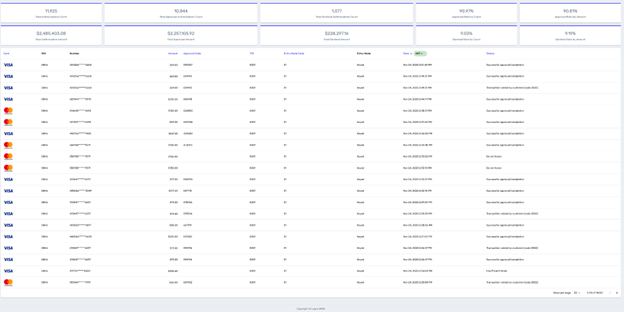
Luqra specializes in merchant processing for scaling online businesses. They enable sustainable growth by providing uncapped accounts without arbitrary holds or freezes, chargeback management tools, and our proprietary VAMP monitoring dashboard for real-time insights. Every merchant is backed by a dedicated rep, 24/7 in house support and a team with over a decade of experience and billions in processing.
Every merchant is backed by a dedicated rep, 24/7 in house support and a team with over a decade of experience and billions in processing.
Key features include:
- Uncapped accounts: enable merchants to scale without volume caps, pointless holds or freezes
- Integrations: Seamlessly integrates with major e-commerce platforms like shopify,Go High Level, WooCommerce, Click Funnels Authorize.net, NMI and more
- Fraud prevention: automated fraud prevention and monitoring tools
- Chargeback management: RDR, ehtoca and other tools that help block up to 99% of chargebacks
- VAMP dashboard: First of its kind tool that provides real time insights into merchant’s risk exposure from TC40 alerts
- Always on support: 24/7 in house US based support - no foreign agents or call centers
- Assigned representative: A rep that provides a dedicated point of contact for merchants
- Customized programs: IIn house underwriting and risk management that creates a customized program for each merchant- no one size fits all solutions.
- Specialized Verticals: Experts with 10+ of experince in biotech, gaming and e-commerce payment processing
Source: Luqra

2. Stripe
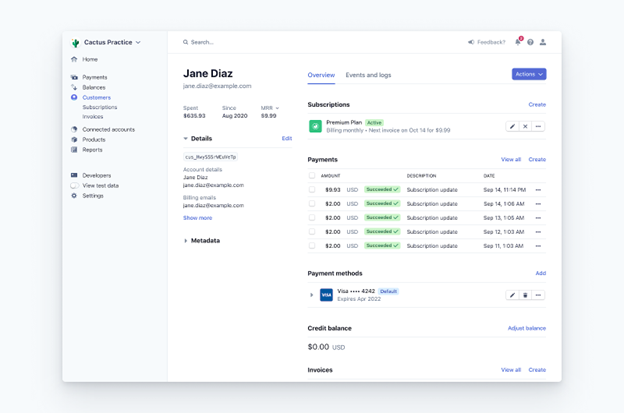
Stripe is a full-stack online payment processor for businesses ranging from startups to large enterprises. It offers a unified platform that handles online, in-person, and global payments, allowing merchants to operate in 195 countries and accept over 100 payment methods. Stripe provides tools to optimize checkout, fight fraud, and improve authorization rates.
Key features include:
- Optimized checkout suite: Prebuilt UIs and one-click checkout (Link) reduce friction and improve conversion rates
- Global payment support: Accept payments in 195 countries and 135 currencies with local acquiring in 46 markets
- 100+ payment methods: Access cards, wallets, bank debits, and buy now, pay later options
- Cross-border payments: Multi-currency settlement and local currency presentation reduce conversion and operational costs
- Fraud prevention: Stripe Radar uses AI and billions of data points to detect and prevent fraud in real time
Source: Stripe

3. Square
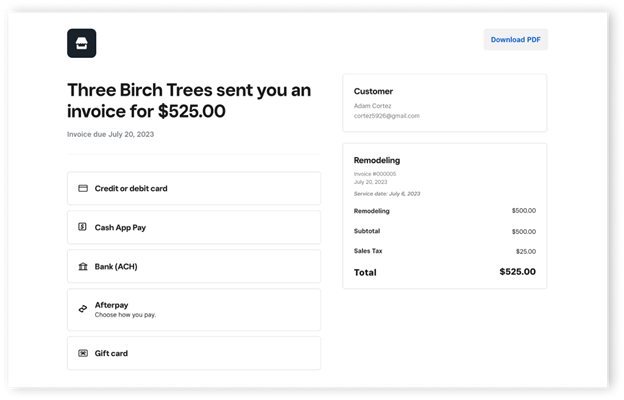
Square is an online payment processor that enables businesses to accept payments anywhere, whether in person, online, or remotely. Square supports secure, PCI-compliant transactions without contracts or hidden fees. It provides instant access to funds, hardware integration, and tools for managing cash flow and customer payments.
Key features include:
- Omnichannel payment acceptance: Take payments in person, online, over the phone, or via invoices and payment links
- Instant payouts: Access funds 24/7 with next-day or instant transfers to a bank account
- No hidden fees: Transparent pricing with no contracts or surprise charges
- Buy now, pay later: Offer installment payments through Cash App Afterpay while receiving payment upfront
- Tap to pay: Accept contactless payments directly on iPhone or Android, no extra hardware required
Source: Square

4. Helcim
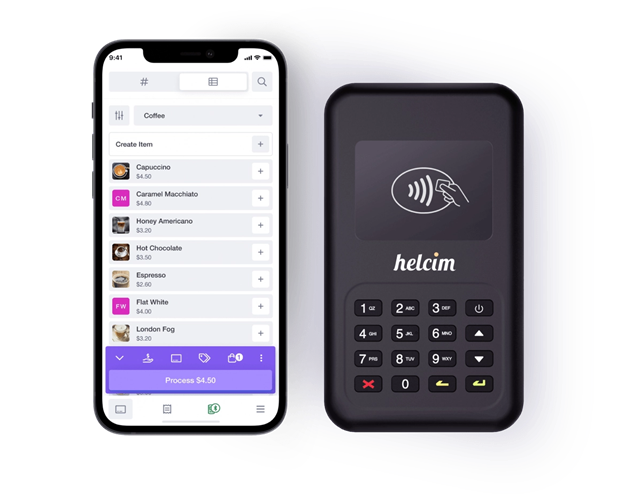
Helcim is a payment processor for small and medium-sized businesses that want affordable, transparent pricing without contracts or monthly fees. It supports in-person and online payments through a single account that includes access to invoicing, a virtual terminal, recurring billing, and a full-featured POS system.
Key features include:
- Transparent, low-cost pricing: Interchange plus model with no monthly fees, hidden charges, or contracts
- Omnichannel payment support: Accept payments in person, online, by phone, or through invoicing and recurring billing
- Free POS software: Manage payments, inventory, customers, and sales from one app at no additional cost
- Online payments: Build a hosted online store or integrate payments into the website using Helcim’s tools
- Virtual terminal: Key in card details remotely for phone and manual transactions
Source: Helcim

5. Finix
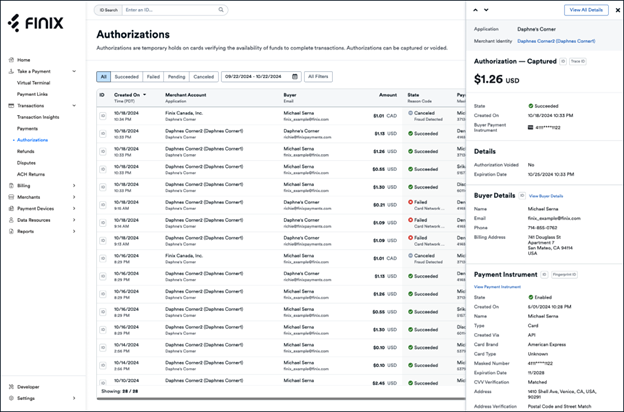
Finix is a payment platform for businesses that want to accept payments online or in person with minimal setup. Its low-code and no-code tools, like hosted checkout pages, payment links, and a virtual terminal, allow organizations to integrate processing of card, ACH, or digital wallet transactions into their websites without extensive development work.
Key features include:
- Low-code / no-code setup: Quickly accept payments through hosted checkout pages, embedded payment links, or the Finix virtual terminal
- Multiple payment methods: Accept credit and debit cards, ACH/EFT transfers, and digital wallets such as Apple Pay, Google Pay, and Samsung Pay
- Single API integration: Manage online and in-person payments from one unified platform
- Fraud monitoring and dispute management: AI-driven tools detect suspicious transactions and simplify chargeback resolution
- Predictable, transparent pricing: Flat subscription model with no interchange markup and built-in fraud and compliance tools
Source: Finix

6. Shopify Payments
Shopify Payments is the built-in payment processing solution for Shopify merchants, designed to help businesses start accepting payments instantly without third-party setup. It supports major credit cards, digital wallets, and local currencies integrated into the Shopify platform.
Key features include:
- Instant activation: Skip third-party applications; Shopify Payments is ready to use with the Shopify store
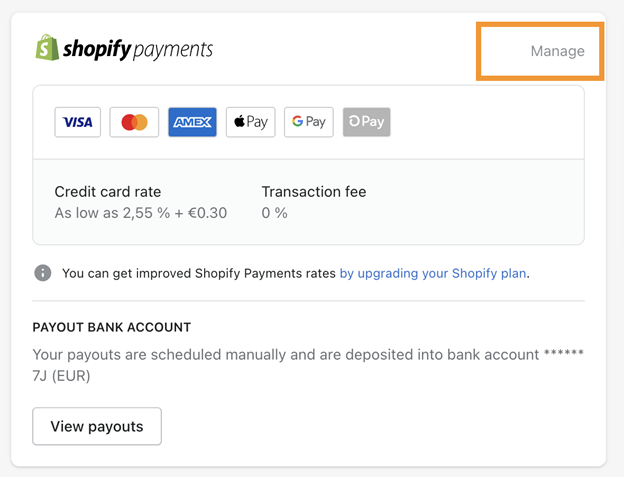
- Integrated checkout: Accept Visa, Mastercard, American Express, Shop Pay, Apple Pay, and Google Pay
- Localized payment support: Enable local currencies and payment methods to increase international conversions
- Secure transactions: PCI-compliant, supports 3D Secure, and encrypts all payment data
- Unified dashboard: Track orders, payments, and cash flow from within the Shopify admin
Source: Shopify

7. Stax
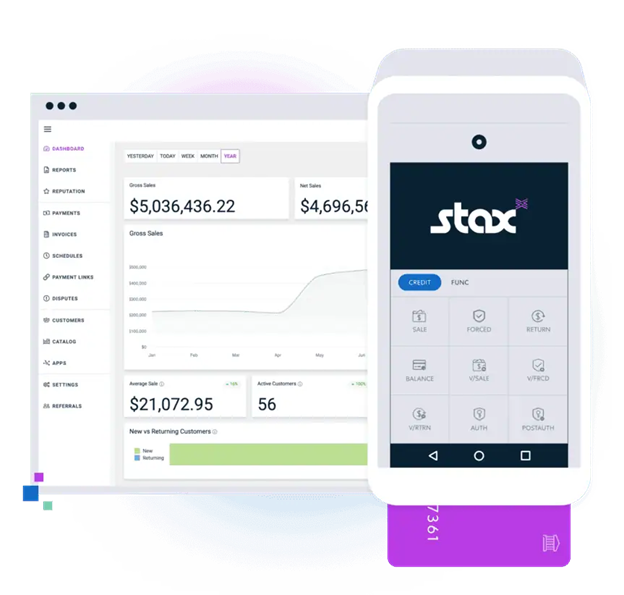
Stax is an all-in-one payments platform with a subscription-based pricing model, without percentage markups. With Stax, businesses can accept every major payment type and manage transactions, reporting, and invoicing from a single dashboard.
Key features include:
- Subscription-based pricing: Transparent, flat-rate plans with no hidden fees or processing markups
- All-in-one platform: Centralized dashboard for payments, invoicing, reporting, and reconciliation
- Flexible payment options: Accept credit cards, ACH, contactless, and mobile payments with ease
- Scalable infrastructure: Designed to grow with the business, from SMBs to large enterprises
- Custom integrations: Build tailored payment workflows and connect multiple business locations
Source: Stax

8. Payline
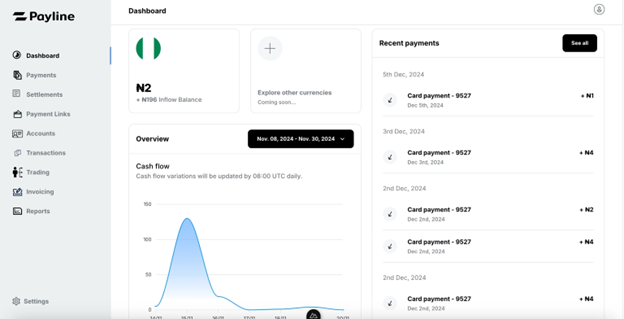
Payline is an online payment solution that offers secure payment tools without the need for a developer. It supports hosted checkout pages, virtual terminals, and API integrations, allowing businesses to accept payments online, over the phone, or through invoicing.
Key features include:
- Hosted checkout pages: Drop-in checkout forms that require no coding or development work
- Virtual terminal: Key in payments from any web browser, suitable for remote teams or phone orders
- Invoice & payment links: Send branded, trackable links via email, text, or chat to collect payments
- Custom API access: Developer-focused APIs for full integration into apps, SaaS platforms, or marketplaces
- No developer needed: Most tools work out-of-the-box, allowing quick setup and immediate use
Source: Payline

Choosing the Right Online Payment Processor
Selecting the right online payment processor is critical for ensuring smooth transactions, minimizing costs, and supporting business growth. The right choice depends on your business model, technical capabilities, customer base, and regulatory needs. Below are key considerations to guide your decision:
- Business type and volume: High-volume businesses may benefit from dedicated merchant accounts and subscription-based pricing. Small businesses or startups may prefer aggregators like PayPal or Square for easy setup and lower barriers to entry.
- Technical resources: Developer teams can leverage API-based platforms for custom workflows and integration flexibility. Businesses without technical teams might prioritize no-code or low-code platforms with ready-to-use checkout solutions.
- Geographic reach: If your customers are local, domestic processors offer faster settlements and better support for local payment methods. For international sales, choose a processor with strong cross-border capabilities, multi-currency support, and compliance with regional regulations.
- Accepted payment methods: Ensure the processor supports the payment types your customers prefer, including cards, wallets, bank debits, or buy now, pay later options.
- Cost structure: Compare transaction fees, monthly charges, and hidden costs. Understand how pricing models (flat-rate vs. interchange plus) affect your margins.
- Security and compliance: Look for built-in fraud prevention, PCI DSS compliance, tokenization, and tools for managing disputes and chargebacks.
- Integration and ecosystem: Consider whether the processor integrates with your existing tools, such as e-commerce platforms, accounting software, or CRM systems.
- Customer experience: Fast, seamless checkouts reduce cart abandonment. Evaluate the user experience, mobile optimization, and localization features.
- Support and reliability: Check for availability of customer support, service level agreements (SLAs), and redundancy measures to avoid downtime.
Best Practices for Managing Online Payments
Here are some of the ways that organizations can improve their use of online payment processors.
1. Simplify Checkout UX for Conversion
A simplified, intuitive checkout process is vital for maximizing conversion rates and customer satisfaction. Businesses should minimize required form fields, support guest checkout, and use clear error messaging for failed transactions. Trust signals, such as security badges and transparent pricing, help foster confidence at the point of sale. Autofill capabilities and one-click payment options can further remove friction.
Responsive design and fast page load times are equally important, as delays can prompt users to abandon the purchase. Regularly test the checkout experience on multiple devices and browsers to uncover usability issues. Use A/B testing to experiment with layout, field order, and payment method availability, continually optimizing for higher completion rates.
2. Monitor Fraud and Chargeback Ratios
Vigilant monitoring of fraud and chargeback ratios is essential for maintaining a sustainable online payments operation. High chargeback rates can result in penalties, higher fees, or termination of merchant accounts. Use the reporting tools and alerts provided by your payment processor to track key metrics and quickly flag unusual patterns or spikes in disputes. In addition, automated chargeback management tools like RDR, Disputifer, Ethoca can help manage and reduce chargeback ratios.
Implement robust fraud detection systems, including machine learning tools, rules engines, and manual review processes for high-risk transactions. Require strong customer authentication where possible (such as two-factor authentication or 3D Secure) to reduce the risk of unauthorized purchases.
3. Automate Reconciliation and Reporting
Manually reconciling payments with bank deposits and accounting systems can introduce errors and consume significant resources. Leveraging automation within your payment processor’s platform can simplify reconciliation, helping match settlements and transactions accurately and in real time. Integrated reporting tools reduce administrative overhead and provide quick visibility into transaction status, chargebacks, and net revenue.
Automation also supports compliance and audit requirements, creating a transparent record of payment activity for financial reviews or tax preparation. Choose processors that offer robust APIs or pre-built integrations with your accounting stack. Timely, accurate reconciliation helps avoid revenue leakage, ensures regulatory compliance, and enables business decision-making.
4. Optimize for Mobile Payment Flows
With a growing share of e-commerce occurring on mobile devices, optimizing your checkout for mobile is now non-negotiable. Responsive design, large touch targets, and simplified forms are essential for mobile commerce success. Support mobile-specific payment methods such as Apple Pay, Google Pay, and popular regional wallets to meet customer expectations and increase conversion rates.
Reduce the number of steps required to complete a transaction, use autofill for payment details, and provide clear progress indicators. Conduct usability testing specifically on mobile devices to reveal friction points and address them quickly. Fast, frictionless mobile payment flows directly impact sales performance and repeat business, especially as consumers increasingly prefer mobile-first shopping experiences.
5. Regularly Review Processor Agreements
Processor agreements, pricing, and feature sets can change over time, impacting your business’s bottom line. Regularly review your processor’s terms, fee schedules, and service level agreements to identify any changes or hidden costs. Monitor the competitive landscape to ensure your processor is delivering value for your current transaction volume and business stage.
If you notice rising fees, restrictive contract terms, or declining support quality, it may be time to renegotiate or consider alternative providers. Staying proactive in managing your payment processor relationship ensures you benefit from the best available rates, relevant features, and evolving security standards.
Conclusion
Online payment processors simplify the complexities of digital transactions by managing payment capture, authorization, security, settlement, and reporting. Whether using a full-service platform or building a custom flow with APIs, businesses benefit from reduced development overhead, improved security, and scalable infrastructure. As payment preferences and technologies evolve, selecting the right processor and following best practices becomes critical for maintaining operational efficiency, minimizing risk, and delivering a smooth customer experience.
Payments That Scale With You
Online businesses need a scalable payment processing solution that supports growth without unnecessary holds, freezes, or volume caps. Luqra provides uncapped merchant accounts backed by extensive underwriting, helping ecommerce, subscription, digital goods, and high-volume online merchants operate with greater stability.
Direct integrations with Shopify, WooCommerce, Go High Level, Authorize.net, NMI, and SwipeSimple allow for seamless setup without downtime. Built-in fraud prevention tools, advanced chargeback management with Disputifier integration, and a proprietary VAMP monitoring dashboard help merchants stay compliant while reducing disputes. The centralized ERP system streamlines ticketing, chargeback responses, deposits, and transaction tracking in one place.
Merchants benefit from uncapped merchant accounts that support high-volume ecommerce growth, allowing businesses to scale without artificial processing ceilings. Disputifier-backed dispute automation reduces chargebacks, while real-time VAMP monitoring supports ongoing card network compliance. Seamless Shopify and WooCommerce integrations make implementation straightforward, and 24/7 in-house ecommerce risk support ensures merchants have access to knowledgeable assistance whenever it is needed.
For businesses seeking reliable online payment processing with long-term scalability, Luqra delivers a stable infrastructure designed to support consistent revenue growth.